Addressing Ableism Through Anime
Added 2025-02-16 04:49:01 +0000 UTCAuthor: Robert Iveniuk
Editor: Cy Catwell
CONTENT WARNING: The following article addresses ableist bullying and violence, both in fiction and in the real world, as well as real systemic oppression and erasure of disabled persons in Japan especially. Reader discretion is advised.
Anime and manga can cover a wide variety of subjects, sometimes clumsily and sometimes with tact, but in ways that are always worth discussing. The adage “There’s an anime for just about anything” is a phrase bandied about in the fandom, usually as a slight or as a gag, with anime about high-stakes baking tournaments or maid café gang wars cited as accessible examples. This is, in truth, a point in anime’s favour. Many series address a range of intersecting topics or themes of interest to both the creative teams behind them and the audiences that they attract. As such, it’s no surprise that the theme of disability is covered in multiple series in a variety of ways.
Historically, however, disability gets depicted in anime in two main ways. In dramas, a character’s disability is often used as a tragic plot device, as seen in Your Lie In April, Looking Up At The Half-Moon, or My Sister Momoko. In more action-oriented shows, having a disability is how certain characters develop literal superpowers, such as blind characters possessing heightened senses, i.e. Jojo’s Bizarre Adventure’s N’Doul or One Piece’s Fujitora. Sometimes, that’s augmented by a character's disability being part of a cruel trade-off, such as Jujutsu Kaisen’s Kokichi “Mechamaru” Muta case, living with never-ending physical pain in exchange for increased magical power.
For the longest time, many folks’ go-to anime and manga for positive disability rep were Full Metal Alchemist and Berserk, if only because those series were considerably popular. In more recent years, though, a number of anime and manga have come out that not only discuss living with a disability, but also focus on finding and building a support network. This can especially be seen in the slice-of-life subgenre.
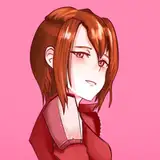
One example of this is Tomohito Oda’s Komi Can’t Communicate, the story of a girl living with a communication disorder who, after failing to make friends during elementary school and middle school, vows to make over a hundred friends at her high school. Other manga and anime in this same vein include Yoshitoki Ōima’s A Silent Voice and Makoto Ojiro’s Insomniacs After School. Voice follows a deaf girl and her former elementary school bully reconnecting and working on a student film together, while Insomniacs is about two high schoolers suffering from insomnia – one caused by trauma and the other caused by a heart condition – restarting their old astronomy club as a cover for their ailments.
It’s worth noting that all three of these titles focus on the idea of our disabled heroines forming and maintaining robust friend circles, with them essentially at the centre of the narratives. That said, the perspective is from their supportive male counterparts and love interests. Shouko Komi’s dream of getting 100 friends is hers and hers alone, but it’s male protagonist Hito Tadano who serves as go-between for her and the other students. Isaki Magari already has a vibrant social life, one that the cantankerous fellow insomniac Ganta Nakami gets pulled into by happenstance, but Ganta is the focal character. Finally, A Silent Voice is about Shouya Ishida coming to terms with his past as a bully more-so than it is about Shouko Nishimiya dealing with her past having survived being bullied for being deaf.
It’s a point of interest that all three of these series are all romances on top of being slice-of-life stories about friendship. Komi’s friendship with Tadano and Isaki’s friendship with Ganta both evolve into relationships at different points in the narrative, and it’s highly suggested that Ishida and Nishimiya’s camaraderie in A Silent Voice has a romantic tinge to it. One could make the argument that the disabilities of these girls are almost exoticized, that these stories are more-so about protecting a helpless girl and the promise of a cute romance blossoming out of it than they are about addressing ableism. The fact that all three female leads are conventionally and socially attractive kind of adds to this, as if to say empathy for people with disabilities isn’t possible unless the disabled person is a cute anime girl struggling for acceptance.
On the other hand, one of the reasons people say disability representation matters now more than ever is because it’s easy to connect with people of disparate and marginalized groups if they are presented positively in different types of media. And what’s more positive than having a supportive partner? Tadano is incredibly patient with Komi and doesn’t try forcing her out of her comfort zone. On learning that Magari’s insomnia is caused in part by her fearing for her mortality, Nakami starts coming up with ways to help her sleep, such as sending personalized broadcasts via an app so she feels less alone at night. Ishida not only renounces his past as a bully, but learns sign language so he can communicate with Nishimiya and defends her from both bullies and her own feelings of self-loathing.
Furthermore, even though Komi and Magari and Nishimiya are often portrayed as deuteragonists, these series do try to give us a sense as to how they think and feel about the world around them and their place in it. We get moments from Komi’s perspective, see how she communicates with her family and even bits of her internal monologue when dealing with others. Magari’s fear that her heart condition could take a turn for the worse lets her embrace life rather than run from it. Nishimiya struggles with the trauma of being bullied, but works hard to accommodate everyone around her because she wants to be liked, going so far as to help people learn sign language so they can roast her better. Showing audiences that disabled people are not only complex human beings, but also worthy of love, helps push away more damning portrayals of disabled folks.
This is all important because, at the time of writing, 7.6% of Japan’s population lives with a disability. While there are some protections for disabled persons in Japan today, there is still a long history of accessibility barriers for such folks, and their treatment in Japanese society remains far from ideal. It wasn’t that long ago that Japan forcibly sterilized over twenty-five thousand people with physical, mental, and intellectual disabilities as part of the Eugenic Protection Act, a ghoulish piece of legislation that lasted from 1948 to 1996. Even with this cruel piece of legislation gone, the negative view of disabled people has remained. The extent of the country’s ableism was highlighted following a 2016 killing spree, where nineteen disabled people were murdered in a targeted attack – and none of the victims’ names were released.
Mercifully, few people are taking this lying down. Activists like Misako Yasuhara have led the charge in making Osaka safer for people with disabilities, and the transit system has made considerable changes in the bid for accessibility. While there is still more work to be done, progress is still being made. I would argue that that progress can also be seen in the anime and manga world today – including in the industry itself. In recent months, for example, a new studio in Kyoto called Shake Hands has created a space for neurodivergent artists to work in the animation field.
Art, especially pop culture, may not have the power to manifest laws or accessible architecture through its sheer existence, but it can change hearts and minds. This is exemplified in our male leads’ treatment of their love interests when they learn about their disabilities. Think about Komi Can’t Communicate and how Tadano really does his best to meet Komi at her level while also helping her overcome her anxieties, or Ishida’s efforts to undo the damage he did to Nishimiya and be a better ally, or Magari choosing to have a decently-sized friend group before Nakami ends up in her orbit. Getting involved with our heroines changes their lives and our heroes' lives for the better. More importantly, Komi and Nishimiya and Magari’s treatment by their friends and love interests defies the image of disabled people as hopeless causes.
It’s not just slice-of-life stories these days, either. Deaf-mute Bojji from Ranking of Kings is far from a tragic figure. His life is hardly cheery but it never breaks his stride, and he remains a formidable protagonist and a beacon of light. What’s more, characters find ways to accommodate him by learning sign language or otherwise ensure that he can read their lips. Kou Tosaya’s tragically short-lived supernatural drama Goze Hotaru reintroduces modern readers to goze, blind female musicians who performed around Japan during the Edo Period. The titular heroine Hotaru may not be a Zatoichi-esque figure, but her blindness is still something she lives with, and her found family of fellow goze musicians help her navigate around the world.
While all this is great, I do feel like it matters more that Komi, Voice, and Insomniacs are slice-of-life stories over fantasy or sci-fi. The grounded settings remind us that you’re more likely to meet people with disabilities at school or in your neighbourhood than in, say, a haunted forest or a giant’s stronghold. Living with a disability is a part of the human experience. The belief that such people are cursed or a burden is fading. The uptick in anime and manga depicting people with disabilities positively is proof of that. It shows that there is a change in public perception, and that it’s going in a positive direction.
And honestly, I think it does help that Komi and Magari and Nishimiya are, while distinct, virtually the same as other cutesy anime girl leads, and that they “do not look disabled,” as it were. Because it doesn’t matter how visible or invisible someone’s disability is. Whether it’s insomnia, or a communication disorder, or deafness, it’s still a part of someone’s reality. More importantly, it’s part of our reality. Being able to accept that, to have such people in your life and to stand up for them, and also just to appreciate that they’re around, is the most human thing you can do.